


The short answer: to judge a supplement claim, ask six questions. What type of study was it? How many people took part? Were women like you included? What was actually measured? Who funded it? How big was the real-world difference? This guide explains each one in plain English, with no science degree required.
Key takeaways
- "Clinically proven" and "studies show" are not evidence on their own. The study type, size, participants, outcome, funding and effect size tell you how much weight a finding deserves.
- In Great Britain, food supplements do not need pre-market approval, but any health claim on a label or advert must be authorised on the GB nutrition and health claims register.
- Randomised controlled trials and systematic reviews carry more weight than single observational studies or laboratory findings.
- "Statistically significant" and "meaningful to you" are different things. Look for the effect size.
- Women, including women in perimenopause, have often been under-represented in research, so always check who was in the study.
- Good evidence usually means several consistent studies, not one perfect trial.
You have probably seen it many times. A product says "clinically proven" or "studies show", and a supplement suddenly feels more credible. But how would you check? Most of us were never taught how, and nobody puts that information on the label.
This guide will not tell you what to take or what to avoid. It will help you read supplement research for yourself, so you can decide how much weight any claim deserves. It connects to the wider question of how to choose a supplement worth taking, and it reflects what we believe at Stillen: you deserve honest information before you are ever asked to buy anything.
Why is reading health research so hard?
It is hard because health information is written for people who already know the vocabulary. A study published in the British Journal of General Practice found that 43% of working-age adults in England struggle to understand health information that contains only text, rising to 61% when numbers are involved. Understanding a study asks for yet another layer of skill: knowing what a trial design means, whether the sample is large enough, and whether the people studied resemble you.
If you are navigating perimenopause, the picture can feel even more confusing, because research in women's health has historically lagged behind and the marketing is loud. The gap is a problem with how information is shared, not with your ability to understand it. The six questions below close that gap.
How is supplement regulation different from medicine regulation?
In Great Britain, food supplements are regulated as food, so they do not need to be authorised or to prove that they work before they are sold. Medicines are different: they need a marketing authorisation from the MHRA, which is based on evidence of safety, quality and effectiveness.
That does not mean supplements are unregulated. Supplement businesses must register as food businesses, follow labelling and safety law, and are checked after products reach the market by local authorities. Any specific health claim must also appear on the GB nutrition and health claims register, and the product must meet the conditions of use for that claim. Claims that a food supplement can treat, prevent or cure a disease are medicinal claims and are not permitted.
Two things follow from this:
- An authorised claim reflects an assessment of what a nutrient does in the body. It is not proof that one particular product will change how you feel.
- The studies behind supplements are often smaller and shorter than the trials used to support medicines. That does not make them worthless. It means the evidence is usually less certain, and it is reasonable to weigh it that way.
For more on the UK picture, see Before You Start Supplementing: The UK Context Worth Knowing.
What is the evidence pyramid, and where does a study sit on it?
The evidence pyramid, also called the evidence hierarchy, ranks research designs from least to most reliable for answering "does this work?" Knowing where a study sits tells you how much weight to give it.
|
Level |
Study type |
What it can tell you |
Main limitation |
|---|---|---|---|
|
1 (lowest) |
Laboratory, cell and animal studies |
How something might work |
Not shown to work in people |
|
2 |
Anecdotes and case reports |
One person's experience |
Cannot be generalised |
|
3 |
Expert opinion and editorials |
Informed commentary |
Not original data |
|
4 |
Cross-sectional and case-control studies |
Patterns across groups |
Show associations, not cause |
|
5 |
Cohort studies |
Groups followed over time |
People are not randomly assigned, so other factors may explain results |
|
6 |
Randomised controlled trials (RCTs) |
Whether a supplement outperforms a placebo |
Can be small, short or narrow |
|
7 (highest) |
Systematic reviews and meta-analyses |
Combined results of many studies |
Only as good as the studies included |
Two features make RCTs stronger. Randomisation means chance, not choice, decides who receives the supplement, which helps balance out differences between groups. Blinding means participants (and ideally researchers) do not know who is taking what, which reduces the effect of expectations.
Here is why this matters. A brand might say "a study shows a supplement improves sleep." That could mean a four-week observational study of 30 people, or a meta-analysis pooling several RCTs. These are not equivalent, and the label rarely says which one it is. So the first question to ask is simply: what kind of study is this?
Does sample size matter?
Yes. Larger studies are less likely to produce a result by chance and give more precise estimates, but the number of people needed depends on how big an effect the researchers are trying to detect. Good studies explain how they chose their sample size, often called a power calculation. If a study does not, treat its findings with extra caution.
As a rule of thumb, small studies of a few dozen people are useful for spotting ideas worth testing, but rarely settle a question. Many supplement trials are small, which is worth remembering when a finding is presented as settled science.
What does "statistically significant" mean?
A p-value is the probability of seeing a result at least as large as the one observed if the supplement actually had no effect. A p-value below 0.05 is the conventional threshold for calling a result "statistically significant." It does not tell you the chance that the result was a fluke, and it says nothing about how large or important the effect is.
Why does effect size matter more?
Effect size is the actual size of the difference between groups. A supplement might produce a statistically significant improvement of 0.3 points on a 10-point sleep scale. That can be real and still too small to notice. When you read a study or a brand's claim, ask: how big was the difference, and would I notice it? Look too for a confidence interval, which shows the range in which the true effect probably sits. A wide range means more uncertainty.
Who was actually in the study?
A study's findings most reliably apply to people similar to those who took part. Age, sex, hormonal status, health background and where people live can all affect how the body responds.
This matters for women because research has historically included fewer women than men. In the US, the inclusion of women in NIH-funded clinical research was only written into federal law in 1993. More recently, a systematic review of 1,079 cardiovascular trials registered between 2017 and 2023 found that women made up 41% of participants, and in several conditions their share was lower than their share of people with the condition. Those examples come from cardiovascular research, but the lesson applies everywhere: some studies enrol only men, or mix men and women without reporting results separately by sex.
Hormonal context adds another layer. Perimenopause is a transition, often beginning in the 40s, during which hormone levels shift. A study of healthy young men, young women or postmenopausal women may not reflect the experience of someone in perimenopause. See why women in their 40s and 50s may be particularly affected by these gaps for more detail.
When you open a study, go to the "Participants" or "Methods" section and look for:
- The average age and age range.
- The sex breakdown, and whether results are reported separately for women.
- Whether participants had the same symptoms or circumstances you are interested in.
Finding that a study does not match you is not a failure of understanding. It is good critical reading. It does not mean a supplement is ineffective. It means you need better-matched evidence before drawing conclusions.
What was actually measured?
Every study targets a specific outcome, and the choice of outcome shapes what the result can tell you.
A surrogate outcome is a biological marker that stands in for something you care about. For example, a study might measure the level of a nutrient in the blood after supplementation. That shows the nutrient was absorbed. It does not show that participants slept better, felt less tired or coped better with stress. Claims often bridge that gap without saying so: a finding about blood levels becomes a headline about how you will feel.
When studies do measure how people feel, look for validated questionnaires. These are standardised tools tested across populations. The Pittsburgh Sleep Quality Index, for example, is widely used in sleep research, so scores can be compared between studies. A custom questionnaire written for one study has none of those guarantees.
The question to keep asking: did this study measure what I actually want to know?
Who paid for the study?
Funding matters because the organisation paying for research sometimes has a financial interest in the result. A 2017 Cochrane review of drug and medical device studies found that industry-sponsored studies were 27% more likely to report favourable efficacy results and 34% more likely to reach favourable conclusions than studies with other funders. Those figures come from drug and device research rather than supplements, but the same concern is widely raised about nutrition research, and it is a good reason to check the funding statement.
You will usually find it under "Funding", "Acknowledgements" or "Declarations" near the end of a paper. Independent funders such as universities, government agencies and charities tend to add credibility.
Industry funding is not an automatic disqualifier. Plenty of rigorous research is industry-funded, and a well-designed trial can be more trustworthy than a poorly designed academic one. The point is to read the design and reporting with that context in mind. Transparency is also a signal: a brand that names the study design, sample size and limitations is behaving very differently from one that says "clinically proven" with no reference.
How do supplement claims get stretched?
Even good research can be stretched on the way to marketing copy. Five common patterns to recognise:
- Cherry-picking: presenting one positive study without mentioning others that found no effect.
- Treating association as cause: "women who take supplements report better sleep" may reflect other differences, such as diet, exercise or sleep habits.
- Overstating effect size: a result that is statistically significant but too small to notice in daily life.
- Applying group averages to individuals: an RCT shows what happened on average. Your response will depend on your own biology, diet and circumstances.
- Using laboratory findings to support human claims: a cell-level mechanism is interesting, but it is a long way from showing what happens when a person takes a supplement.
If you want to know whether a body of evidence is consistent, look for a systematic review, not a single study.
The six-question checklist for reading supplement research
Keep these six questions handy whenever a new claim crosses your path.
- What type of study is this? Find where it sits on the evidence pyramid. An RCT or systematic review carries more weight than a case report or observational study.
- How many people were in it? Smaller studies can flag ideas worth testing but rarely settle a question. Check whether the researchers explained their sample size.
- Were women like me in this study? Check sex, age range and hormonal status in the participants section. If it is not reported, that tells you something too.
- What was actually measured, and does it match the claim? A blood marker is not the same as how you feel. If the claim is broader than what was measured, it has been stretched.
- Who funded it? Look for the funding statement. Independent funding adds credibility. Industry funding calls for closer reading of the design and reporting.
- How big was the difference? "Statistically significant" is not the same as meaningful. Ask whether you would notice the change in daily life.
What does good evidence for a supplement look like?
Good evidence does not mean one perfect trial. It means a body of converging research: several independent studies, findings that hold across different groups of people, some RCT evidence, and honest reporting of what the research did not show as well as what it did.
The perfect trial rarely exists, particularly in women's health, where samples are smaller and women have been under-represented. Waiting for pharmaceutical-level certainty would leave you stuck. "Promising but not yet definitive" is a useful position to hold. It lets you act with realistic expectations rather than certainty the evidence cannot provide.
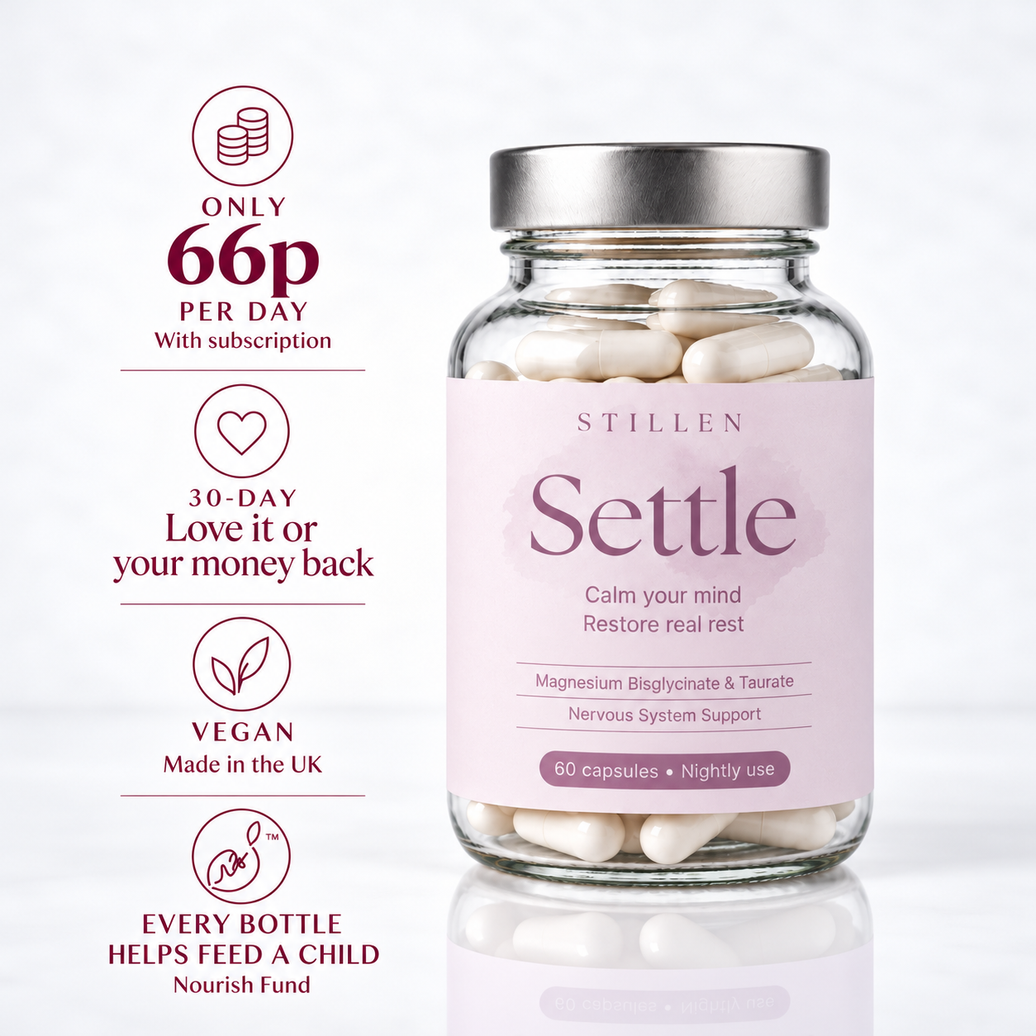
We try to hold ourselves to this standard. Settle, our magnesium supplement, contains magnesium bisglycinate and magnesium taurate. Magnesium contributes to the reduction of tiredness and fatigue, to normal psychological function and to the normal functioning of the nervous system. We keep our claims to those authorised statements and link to our sources on the Settle product page. Please use this checklist on our claims too.
Food supplements should not replace a varied diet. If you are pregnant, take medication or have a health condition, speak to your GP or pharmacist before starting a supplement. If symptoms are affecting your daily life, your GP is the right place to start.
Reading the evidence is an act of self-respect
You do not need to analyse every study perfectly. You need to ask the same six questions consistently and let the answers guide your decisions. The supplement market will keep producing new studies and confident headlines. You now have a way to look past "clinically proven" and ask what it actually means.
The next time a supplement claim catches your attention, open the checklist before you open your wallet.
Frequently asked questions
Do supplements have to prove they work before being sold in the UK?
No. In Great Britain, food supplements do not need pre-market authorisation or proof of effectiveness, unlike medicines. They must still comply with food safety and labelling law, and any health claim must be authorised on the GB nutrition and health claims register and meet its conditions of use.
What does "clinically proven" mean on a supplement label?
It is not a standardised mark of quality. It can describe anything from a trial of the finished product to research on a single ingredient. To judge it, ask which study, how many people, who they were, what was measured and who funded it.
What does "statistically significant" mean?
It means that, if the supplement had no effect, a result at least this large would be unlikely to appear by chance, conventionally with a p-value below 0.05. It does not show that the effect is large or that it will matter to you. Look at the effect size and confidence interval as well.
Why does it matter whether women were included in a study?
Because findings apply most reliably to people similar to those studied. Women have historically been under-represented in clinical research, and hormonal status can affect how the body responds. A study in young men or postmenopausal women may not reflect the experience of someone in perimenopause.
Is industry-funded research unreliable?
Not automatically. A 2017 Cochrane review of drug and device studies found industry-sponsored studies were more likely to report favourable results and conclusions, which is a reason to read them carefully. Many industry-funded studies are well designed, so judge the design and reporting alongside the funding.
If a study does not apply to me, does that mean the supplement does not work?
No. It means that study does not tell you much about your situation. A supplement may work well in the group studied and remain unproven for yours. You need better-matched evidence before drawing conclusions.
Sources
- Rowlands G, et al. A mismatch between population health literacy and the complexity of health information: an observational study. Br J Gen Pract 2015;65(635):e379-86. https://bjgp.org/content/65/635/e379
- Lundh A, Lexchin J, Mintzes B, Schroll JB, Bero L. Industry sponsorship and research outcome. Cochrane Database Syst Rev 2017;2:MR000033. https://cochranelibrary.com/cdsr/doi/10.1002/14651858.MR000033.pub3/information
- Gulati M, et al. Participation of women in cardiovascular trials from 2017 to 2023: a systematic review. JAMA Netw Open.
- National Institutes of Health Revitalization Act of 1993 (Public Law 103-43).
- Wasserstein RL, Lazar NA. The ASA statement on p-values: context, process, and purpose. Am Stat 2016;70(2):129-133.
- Buysse DJ, et al. The Pittsburgh Sleep Quality Index. Psychiatry Res 1989;28(2):193-213.
- EFSA Panel on Dietetic Products, Nutrition and Allergies. Scientific Opinion on the substantiation of health claims related to magnesium. EFSA Journal 2010;8(10):1807. https://efsa.europa.eu/en/efsajournal/pub/1807
- Great Britain Nutrition and Health Claims (NHC) Register, Department of Health and Social Care.
- Food Standards Scotland. Food supplements: information for consumers. https://www.foodstandards.gov.scot/consumer-advice/healthy-eating/balanced-diet/understanding-nutrients/food-supplements