


If you have woken at 3am with hot flushes, a racing mind, and a shelf of supplements you are no longer sure about, you are not alone. Many women using systemic HRT want to know whether adding magnesium, or another over the counter remedy, is safe. The short answer is not as simple as a label makes it sound. UK guidance is clear that remedies not regulated by a medicines authority, and compounded bioidentical hormone therapy, should not be assumed safe. Variable potency, side effects and interactions all matter. Magnesium is nutritional support, not a menopause treatment, and that honest distinction is where trustworthy advice begins.
This analysis walks through what current UK guidance actually says. You will learn what the NHS says about menopause supplements, how the licensing line works in plain English, and what applies to over the counter products. We will then place magnesium in that picture, answer whether it is safe alongside HRT, and explain how to talk to your GP or pharmacist. Finally, we cover how to choose magnesium carefully if you decide to take it, answer common questions plainly, and point you toward support that takes your concerns seriously.
Waking at 3am and Wondering What Is Actually Safe to Take
It is 3am. You are awake again, your brain will not switch off, and tomorrow you have to carry the whole mental load on empty.
Somewhere in that quiet hour comes the instinct: reach for something on a health shop shelf. Natural. Gentle. Hormone balancing. It feels lower risk than asking for more medication.
That instinct is not silly. It is a reasonable attempt to look after yourself while you are already tired, busy and not sure who to ask.
The real question underneath is usually not "does this work?" It is "is this safe alongside the HRT I already take?"
This piece will not sell you a fix, and it will not tell you off. It will explain what UK guidance genuinely says about supplements and hormone therapy, including the gaps, so you can feel steadier about whatever you decide. If you have been weighing up hormone balance supplements generally, the same principle applies: clarity first, claims second.
What UK Guidance Actually Says About Menopause Supplements
The NHS does not hedge. Health shop menopause products, it says, are not tested and regulated in the same way as medicines such as HRT, so it's not known how safe and effective they are.
The guidance also advises asking a GP or pharmacist before using any complementary therapy. It is a simple step, and an easy one to skip because it feels like overkill. It is not overkill. It is the difference between guessing and knowing.
The remedies the NHS sees most often are evening primrose oil, black cohosh, angelica, ginseng, St John's wort and red clover. On these, its wording is clear: any benefit for menopause symptoms is not supported by scientific evidence, and where some evidence does exist, there is uncertainty about correct doses and how long a benefit lasts.
The caution is about regulation, purity and evidence. Not about plants, and not about you for trying one. Herbal Remedies for Hormones: What to Know Before You Try Them covers the botanical side in more detail. What the guidance does not do is sort products into categories, which is where the licensing line comes in.
The Licensing Line, Explained in Plain English
That same regulatory line separates the hormone options you might be offered. There are three categories. A licensed medicine has been assessed by a regulator for quality, safety and dose. A food supplement, including magnesium, is regulated as food, not medicine. An unlicensed compounded product sits outside both.
Most women have never had this explained, yet the difference matters. ChelWest guidance is blunt: compounded bioidentical hormones are "unregulated unlicensed natural bioidentical hormones with no extant safety data," citing transdermal progesterone cream and oral lozenges. The NHS does not recommend them. The Cleveland Clinic, a US clinical source, has also noted that saliva testing used to set doses is not evidenced to relate to symptoms (ccjm.org).
Licensed body-identical hormones are different. You can be prescribed estradiol preparations or Utrogestan, where the molecule is identical to your own hormones and the product is quality controlled.
Day to day, unregulated means variable potency, unpredictable side effects and interactions. Note honestly: MHRA advice on this dates to 2014, with a note added in 2019. Always check current guidance. If you add a supplement, choose one thoughtfully formulated for women.
What Guidance Says About Over the Counter Supplements

That licensing line matters most when you reach for something off the shelf. The closest thing to a UK clinical position on over the counter supplements comes from ChelWest guidance, which notes that anecdotal evidence supports their use, along with alternative therapies, although there is minimal validated evidence of efficacy.
In plain English: clinicians tolerate them, and plenty of women use them, but they are not validated as a treatment for menopause symptoms.
St John's wort shows why caution is warranted. The NHS states it may cause serious side effects if taken with other medicines, and clinically relevant drug interactions are well documented.
Then there is the word natural. It is a marketing term, not a safety standard. The NHS notes that quality, purity and ingredients cannot always be guaranteed.
So carry one sorting question with you: is what I am taking a licensed medicine or a supplement, and does anyone know exactly what is in it? Our practical guide to reading supplement studies can help you answer the second half.
Where Magnesium Actually Sits in This Picture

If supplements are tolerated rather than validated, where does magnesium sit?
Magnesium is different in kind. It is a nutrient your body needs, not a menopause treatment and not a substitute for prescribed HRT. Full stop.
Its genuine evidence base is normal muscle and nerve function and general wellbeing. Permitted nutrition claim wording supports that framing, not claims about hot flushes, night sweats or hormonal change itself.
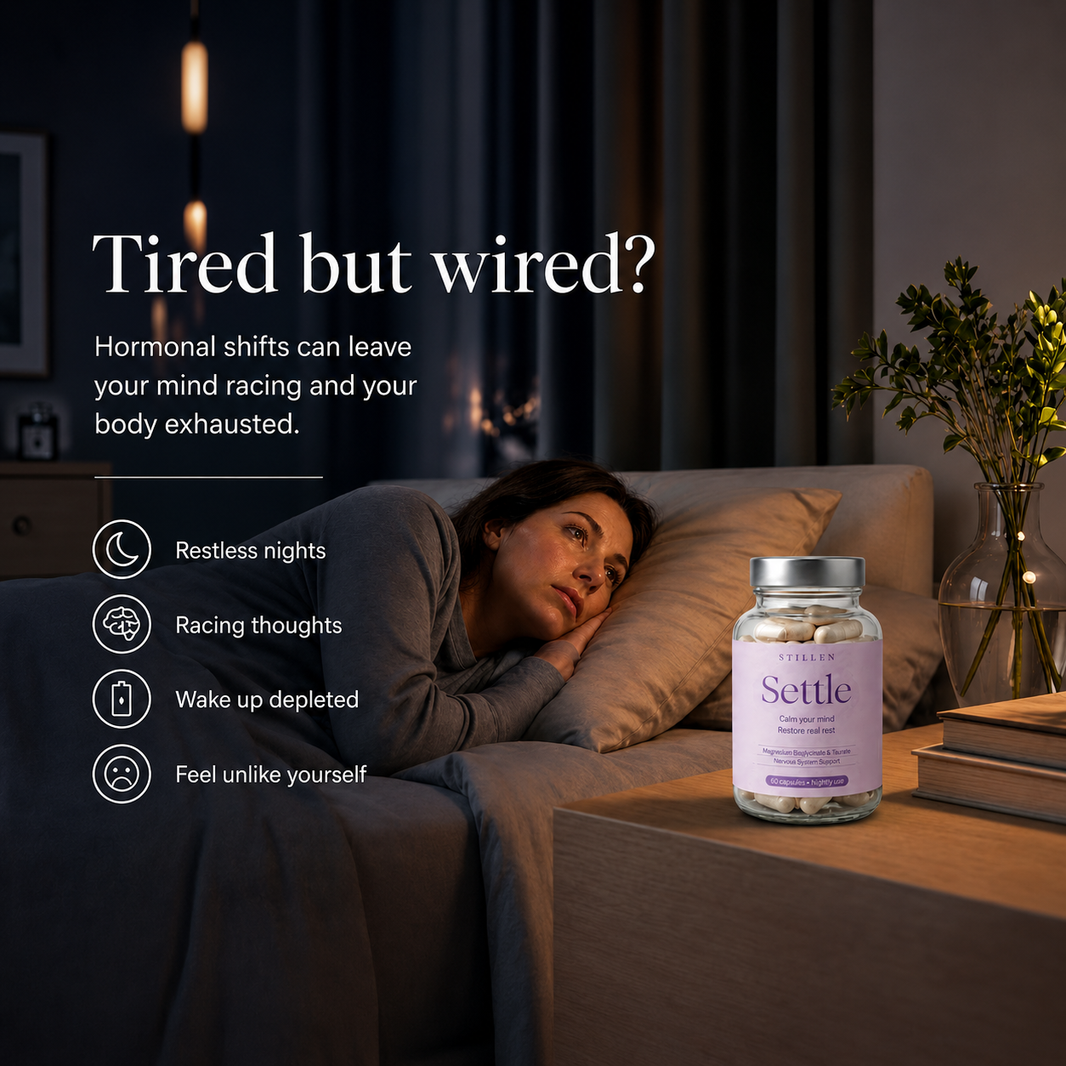
That distinction matters because many women describe feeling tired but wired, a brain that will not switch off, waking at 3am, feeling constantly overwhelmed. For more on why these patterns can be more pronounced in your 40s and 50s, see Why Women in Their 40s and 50s May Be Particularly Affected.
Supporting everyday wellbeing and treating a medical condition are different claims. They should never be blurred.
So think of magnesium as nutritional support that sits alongside whatever you and your clinician have decided on, not a replacement for it.
Is Magnesium Safe With HRT? The Honest Answer
With that distinction clear, here is the honest answer.
No UK guidance reviewed for this article flags a magnesium and HRT interaction. Read that carefully, though. No warning is not the same as proof of safety, and an absence of data is not a clean bill of health.
What does work in magnesium's favour is category. A nutrient at a stated dose sits in a regulated, well characterised group, unlike compounded bioidentical hormones or unregulated botanicals where potency and purity vary.
Some situations make a conversation essential rather than optional:
You take HRT alongside other medicines
You take thyroid medication or diuretics
You have kidney concerns
You are pregnant or breastfeeding
You are planning a higher dose than the label
Otherwise, keep it simple. Follow the dose on the label, add one new thing at a time, and if something feels wrong, stop and ask. For why magnesium earns its place at all, read Magnesium: The Quiet Supporter of Hormonal Health.
How to Talk to Your GP or Pharmacist About It
Take the bottle, not just the brand name. Clinicians need the ingredient panel and dose to judge what is actually inside. Ask one clear question: "Does this interact with my HRT or anything else I take?" Clear questions get clear answers, including about timing and dose.
A pharmacist is a practical first option, you can often ask without a GP appointment. The NHS advises checking with your doctor or pharmacist before starting any herbal product or complementary therapy. If you notice a change in how you feel after starting something new, note it, stop if you feel unwell, and ask. Take that note to your GP or pharmacist. If you're preparing for a wider conversation, our guide on how to talk to your GP about hormone therapy can help you plan what to ask.
Asking is not difficult. It is exactly what UK guidance advises, and it is the responsible way to take your own health seriously alongside HRT.
If You Do Decide to Take Magnesium, Choose It Carefully
A trustworthy label tells you exactly what you are taking: the form of magnesium named clearly, a sensible dose, and a full ingredient panel. If that detail hides behind a vague proprietary blend, put it back.
Walk away from anything claiming to balance hormones, replace HRT or treat menopause symptoms. Those claims are doing the work that evidence should be doing. Under UK advertising rules, a food supplement cannot claim to treat disease, so a product that does is telling you something about itself.
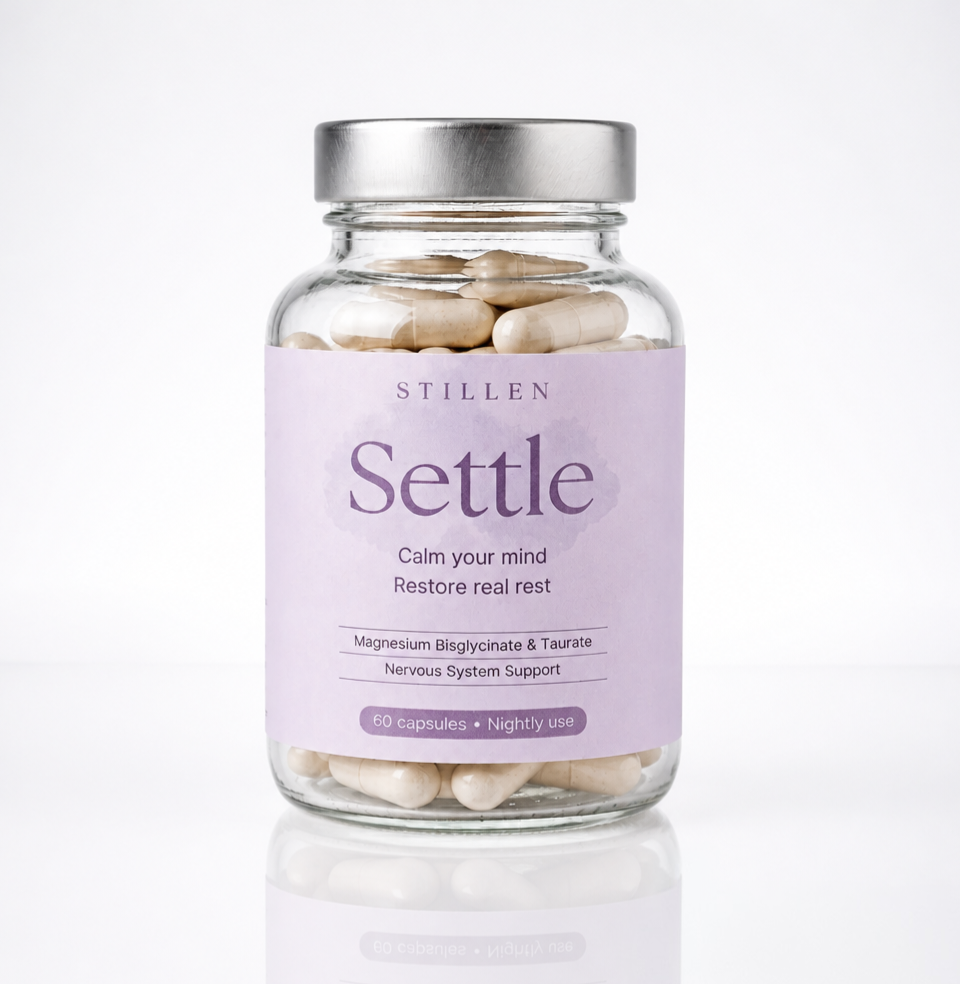
Settle, our premium magnesium blend, was formulated to support the nervous system, restful sleep and everyday wellbeing for women who feel tired but wired. Support, not treatment. The form matters, so it is worth understanding what to look for in a magnesium supplement.
Start one thing at a time, so you can tell what is actually helping, and give it weeks rather than days before you judge it. Keep a short note on your phone: sleep, energy, how you feel. That gives you something concrete to bring to your next GP or pharmacist review.
Your Questions, Answered Plainly
If you have read this far, here are the five answers women ask for most, kept short.
Can I take magnesium with HRT? No UK guidance cited here flags an interaction, but that is not proof of safety. Confirm it with your GP or pharmacist, especially if you take other medicines.
Are natural menopause supplements safe? As covered above, the NHS confirms they are not regulated like medicines.
What are compounded bioidentical hormones? As covered above, they are unregulated and unlicensed, differ from the licensed body-identical hormones a GP can prescribe, and are not recommended.
Does magnesium help menopause symptoms? As covered above, magnesium is nutritional support, not a menopause treatment.
Where can I get reliable advice? Your GP or pharmacist, plus the NHS, ChelWest and MHRA pages cited in this article, linked and dated so you can check them yourself.
Support That Takes You Seriously
Here is the honest summary. UK guidance is cautious about unregulated remedies and compounded hormones, and that caution is about regulation and evidence, not about you.
The core point stands: magnesium is nutritional support, not a menopause treatment.
Three simple actions:
Check every product against its licence status.
Ask your GP or pharmacist about interactions before you start.
Add only one new thing at a time.
Being careful is not the same as being afraid. Asking questions is how you take your own wellbeing seriously, and it is a calmer place to stand than guessing.
That is the standard we set ourselves at Stillen: support that takes you seriously, because you deserve more than just coping.
Conclusion
Check licence status, ask your GP or pharmacist about interactions, and add only one new thing at a time: those three steps remain the clearest take-away from everything covered here. At Stillen, we believe that kind of honest, grounded support is what you deserve.
Frequently Asked Questions
Is it safe to take magnesium alongside HRT?
No UK guidance reviewed in this article flags a magnesium and HRT interaction, so there is no known warning. But be careful how you read that: an absence of warnings is not the same as proof of safety. What works in magnesium's favour is that it is a nutrient at a stated dose, sitting in a regulated and well-characterised category, unlike compounded bioidentical hormones or unregulated botanicals where potency and purity vary. A conversation with your GP or pharmacist becomes essential if you take other medicines, thyroid medication or diuretics, have kidney concerns, are pregnant or breastfeeding, or plan a higher dose than the label.
Are natural menopause supplements safe?
The NHS is clear that health shop menopause products are not tested and regulated in the same way as medicines such as HRT, so it is not known how safe and effective they are. Remedies the NHS sees most often include evening primrose oil, black cohosh, angelica, ginseng, St John's wort and red clover, and any benefit for menopause symptoms is not supported by scientific evidence, with uncertainty about correct doses and how long a benefit lasts. Remember that 'natural' is a marketing term, not a safety standard, and quality, purity and ingredients cannot always be guaranteed. The NHS advises checking with a GP or pharmacist before using any complementary therapy.
What are compounded bioidentical hormones, and are they different from the HRT a GP can prescribe?
Yes, and the distinction matters. Compounded bioidentical hormones are unregulated and unlicensed products with no existing safety data, and the NHS does not recommend them. Examples include transdermal progesterone cream and oral lozenges. Licensed body-identical hormones are different: you can be prescribed estradiol preparations or Utrogestan, where the molecule is identical to your own hormones and the product is quality controlled. Compounded products also carry risks of variable potency, unpredictable side effects and interactions. Note that MHRA advice on this dates to 2014 with a note added in 2019, so always check current guidance.
Does magnesium actually help with menopause symptoms like hot flushes or night sweats?
No. Magnesium is nutritional support, not a menopause treatment and not a substitute for prescribed HRT. Its genuine evidence base is normal muscle and nerve function and general wellbeing, and permitted nutrition claim wording supports that framing rather than claims about hot flushes, night sweats or hormonal change. Supporting everyday wellbeing and treating a medical condition are different claims that should never be blurred. Think of magnesium as something that sits alongside whatever you and your clinician have decided on, not a replacement for it.
How should I choose a magnesium supplement, and where can I get reliable advice?
A trustworthy label names the form of magnesium clearly, gives a sensible dose, and shows a full ingredient panel; if that detail hides behind a vague proprietary blend, put it back. Walk away from anything claiming to balance hormones, replace HRT or treat menopause symptoms, because under UK advertising rules a food supplement cannot claim to treat disease. Start one thing at a time, give it weeks rather than days, and keep a short note on your phone tracking sleep, energy and how you feel. For reliable advice, take the bottle (not just the brand name) to your GP or pharmacist and ask one clear question: 'Does this interact with my HRT or anything else I take?' You can also check the NHS, ChelWest and MHRA pages cited in this article, which are linked and dated so you can verify them yourself.