



One day you feel completely fine, and the next you're in tears over a commercial or snapping at someone you love for no clear reason. Sound familiar? If you're going through menopause, you're probably wondering whether your emotions have simply gone haywire, or if something deeper is happening inside your body.
Here's the truth: menopause mood changes are absolutely real, and they have a solid biological explanation behind them. This isn't just stress, and it definitely isn't "all in your head." The hormonal shifts happening during this stage of life have a direct and powerful impact on the chemicals in your brain that regulate how you feel.
In this post, we're going to break down exactly why menopause affects your mood the way it does. We'll look at the key hormones involved, how they influence your emotions, and what you can realistically expect during this transition. By the end, you'll have a much clearer picture of what your body is going through, and hopefully feel a little less alone in the process.
What Menopause Mood Changes Actually Feel Like
You know that feeling when you snap at someone you love over something tiny, and then immediately wonder who even was that? Or when you wake up after a full night's sleep and still feel like you've been dragged through a hedge backwards? Or the low hum of dread that sits in your chest for no reason you can name?
That's not stress. That's not you falling apart. That's perimenopause, and it's far more common than most women are told.
The clinical checklist of menopause symptoms tends to lead with hot flushes and night sweats. But for a huge number of women, the mood changes arrive first, sometimes years before any of the physical signs appear. Because these emotional shifts don't fit the classic picture, they get misread. Misattributed to work pressure, relationship stress, or simply not coping very well. According to Hopkins Medicine's introduction to menopause, the perimenopause transition can begin well into a woman's thirties or forties, long before periods stop, which is exactly why so many women are left searching for answers in all the wrong places.
The mood changes themselves come in different textures, and it helps to name them. There's the irritability that arrives from absolutely nowhere, disproportionate and sharp. There's the flat, low-level anxiety, a background unease with no obvious source. There's the exhaustion that isn't fixed by sleep, the bone-deep kind that makes the usual mental load feel genuinely unsurvivable. A 2026 global study of nearly 8,000 women found that exhaustion is actually the single biggest psychological symptom jump in perimenopause, rising 56% compared to premenopause. That matters.
And then there's the one that women describe most often, quietly and with some embarrassment: I just don't feel like myself. This isn't vague. It isn't an overreaction. It's a well-documented, recurring experience tied directly to the way fluctuating oestrogen affects the neurotransmitters that regulate mood, confidence, and cognitive clarity. The biology is real. The experience is valid. And you are very far from alone in it.
Why So Many Women Are Told It Is Something Else
If you've ever left a GP appointment with a prescription for antidepressants and a vague sense that something wasn't quite right, you are far from alone. Women going through perimenopause routinely report being told their symptoms are "just stress," offered SSRIs without any hormonal investigation, or sent away with reassurances that everything looks normal on paper. This is not a reflection of your instincts being wrong. It is a gap in how the medical system has historically understood and approached this transition.
Here is why it happens so often. When perimenopause is mentioned, most people picture hot flushes and night sweats. These physical symptoms are visible, measurable, and easier to connect to hormones. But mood changes, including anxiety, low mood, irritability, and that creeping sense of not feeling like yourself, can arrive well before any of the more recognisable physical signs appear. Without a clear hormonal flag, these symptoms can look almost identical to a standalone anxiety disorder or clinical depression, which means they get treated as exactly that.
This is a systems problem, not a personal failing. As researchers and clinicians at Harvard Medical School have noted, many women and their healthcare providers simply do not fully appreciate the mental health risks that emerge as menopause approaches. The result is what one researcher has called an "unholy trinity of neglect": women's health is under-researched, the transition happens in midlife in a culture that undervalues it, and psychological symptoms are taken less seriously than physical ones.
It is also worth naming something directly. The distress of being dismissed, of walking away feeling unheard or even a little gaslit, is not a small thing. That experience sits on top of symptoms you were already struggling with, and it compounds them. Feeling like you have to fight to be believed is exhausting when you are already running on empty.
One more thing worth knowing. If you have a history of PMS or postnatal depression, research suggests you may be more sensitive to hormonal fluctuations during the menopause transition. That is not bad news; it is useful information. Women with hormonal mood sensitivity are not imagining a stronger response. Their nervous systems are genuinely more reactive to the shifting oestrogen levels that define perimenopause.
Understanding that there is a hormonal mechanism behind what you are feeling, specifically that oestrogen plays a direct role in regulating mood-related neurotransmitters, gives you something solid to bring into a conversation with your doctor. You do not need a diagnosis to ask whether the perimenopause transition might be relevant to what you are experiencing. That question alone can change the direction of the appointment.
What the Science Actually Tells Us About Hormones and Mood
So what is actually happening inside your brain when your moods feel this unpredictable? The answer lies in a relationship most of us were never taught about: the one between your hormones and your brain chemistry.
Oestrogen is not just a reproductive hormone. It plays an active role in regulating some of your brain's most important mood-managing chemicals, known as neurotransmitters. Specifically, oestrogen influences serotonin, which supports emotional resilience and a stable mood; dopamine, which is linked to motivation and how rewarding life feels; and GABA, the brain's primary calming signal. Think of these three as a kind of internal weather system, keeping things relatively even. When oestrogen is steady, that system functions well. When it starts fluctuating unpredictably, as it does during perimenopause, the whole system is affected.
Progesterone adds another layer to this. It metabolises into a compound called allopregnanolone, which directly supports GABA activity. So as progesterone drops during the perimenopause transition, your brain also loses a key source of its natural calming chemistry. A 2024 narrative review published in Maturitas confirms that these neurotransmitter systems work together as an interconnected network, and that this network is significantly shaped by oestrogen. Low allopregnanolone, the review notes, is specifically implicated in mood changes during this transition.
The scale of the impact has been confirmed by some of the most robust research to date. A 2026 global study by Cunningham et al., published in the Menopause journal and drawing on data from 7,975 women across 20 countries, found that overall psychological symptom burden rises by 52% in perimenopause compared to before it begins, with Menopause Rating Scale scores moving from 4.8 to 7.3. Crucially, this increase held firm after researchers adjusted for age, education, income, ethnicity, BMI, smoking, alcohol use, and even pre-existing anxiety or depression diagnoses. In other words, the hormonal transition itself appears to be the driver, not life circumstances, not personality, not a pre-existing tendency towards anxiety. The biology is doing this.
The study authors pointed specifically to estradiol variability and low progesterone as the key contributors, which is an important distinction. This is not simply about hormones declining over time in a neat, predictable line. During perimenopause, estradiol levels can swing dramatically from one week to the next. It is that unpredictability, rather than a gradual decrease, that seems to create the most disruption.
This is why the experience can feel so disorientating. As a 2025 review on menopause and mental health puts it, the brain regions most affected by oestrogen, including the prefrontal cortex and hippocampus, are directly involved in emotional processing. When oestrogen fluctuates unpredictably, those regions lose their usual chemical scaffolding. Your mood regulation system is essentially working without its normal supports, which is why feelings can shift quickly and without any obvious external reason. Nothing has to go wrong in your day. The shift is happening at a neurochemical level, and that is not something any amount of positive thinking or willpower can simply override.
The Symptom Nobody Talks About Enough: Exhaustion
Here is something that might genuinely surprise you. When researchers look at which psychological symptoms change the most during perimenopause, anxiety and low mood are not leading the way. According to a large-scale 2026 study published in the journal Menopause, exhaustion emerges as the dominant psychological symptom shift across the transition, rising more sharply than irritability, anxiety, or depressive mood. Anxiety and low mood do increase, and they matter, but they are the smallest movers in the data. That is a significant finding, and it challenges almost everything you will read about menopause mood changes elsewhere.
Most content in this space leads with depression and anxiety. Those symptoms get the headlines, the hotlines, and the prescriptions. Exhaustion tends to get a passing mention, tucked somewhere after the emotional symptoms, treated as a side effect rather than a story in its own right. But for many women in perimenopause, exhaustion is not a side effect. It is the main event.
What This Actually Feels Like
This is not ordinary tiredness. This is waking up after eight hours and feeling like you have not slept at all. It is getting through the day feeling like you are wading through something heavy and invisible, where things that used to feel manageable now feel like too much. The school run, the work deadline, the text you keep meaning to reply to; all of it feels like it costs more than it should. And then rest, when you finally get it, does not seem to restore anything. You lie down and your mind keeps moving. You sleep, but you do not recover.
This is what it means to be tired but wired. Your nervous system is stuck in a state of high alert, doing its best to keep you functional while your hormones shift beneath it. Oestrogen receptors are found throughout the brain in regions that govern emotional regulation and stress response. When oestrogen fluctuates unpredictably, as it does throughout perimenopause, those systems are repeatedly activated without clean resolution. The body is working hard at a hormonal level, even when it looks like you are simply lying on the sofa.
This Is Not a Willpower Problem
It is worth saying clearly: exhaustion this deep is not laziness. It is not burnout from working too hard, or a sign that you need to improve your self-care routine. It is a physiological response to a hormonal system in genuine flux. Research into menopause and mental health confirms that these changes have real biological roots, and that midlife exhaustion is frequently misread as a lifestyle problem when it is actually a hormonal one.
Naming it accurately matters more than it might seem. When you understand that your exhaustion has a physiological cause, you stop blaming yourself for it. And that shift, from self-blame to self-understanding, is often where things start to feel a little more manageable.
The Sleep, Mood, and Fatigue Cycle That Keeps Repeating
If you have been lying awake at 3am wondering whether you have insomnia, anxiety, or just lost the ability to function like a normal person, this section is for you. Because what many women are actually experiencing is not three separate problems. It is one self-reinforcing cycle, and understanding how it works can genuinely change the way you see your symptoms.
Here is how it tends to go. A disrupted night, whether from night sweats, racing thoughts, or simply waking and being unable to drift back off, means you start the next day already running low. That sleep deficit makes you more irritable, less able to concentrate, and more prone to anxiety. Your stress response is heightened, your nervous system is on edge, and by evening you feel simultaneously exhausted and wired. Then when you finally get to bed, your body and brain are too activated to settle. And so the cycle continues, night after night, deepening the exhaustion layer by layer.
What makes this particularly hard is that the symptoms overlap so completely. Fatigue can look like low mood. Anxiety can cause insomnia. Poor sleep worsens emotional reactivity. Because everything feeds into everything else, it becomes almost impossible to identify which symptom actually started the loop. And without that clarity, many women turn the blame inward. I should just be able to sleep. Why can't I calm down? Other people manage this. That internal narrative is understandable, but it misses the point entirely. This is not a willpower problem. It is a physiological loop with a hormonal driver at its root.
That driver is worth naming clearly. Research into sleep disturbance and perimenopause confirms that night sweats and nocturnal awakenings are among the most common perimenopausal experiences, with up to 80% of women experiencing vasomotor symptoms during the transition. The characteristic 3am waking is not random. As progesterone declines, its natural calming effect on the brain diminishes. Oestrogen fluctuations impair thermoregulation and affect melatonin production. So even when the presenting problem looks like insomnia or daytime anxiety, the underlying cause is hormonal, not a sleep disorder in the conventional sense.
Chronic sleep deprivation then compounds the picture neurologically. When the brain is consistently under-rested, the prefrontal cortex, which is responsible for calm decision-making and emotional regulation, becomes less effective. Studies show amygdala reactivity to negative stimuli can increase by around 60% under sleep-deprived conditions. This means the emotional sensitivity already triggered by hormonal changes gets amplified further, making the irritability and overwhelm feel completely disproportionate to whatever actually caused them.
The encouraging part is this: because the nervous system sits at the centre of the cycle, it also represents a genuine point of entry for support. Approaches that reduce physiological hyperarousal and help restore the body's natural shift toward calm offer a meaningful way to begin interrupting the loop, rather than just managing individual symptoms in isolation.
What Actually Helps: Evidence-Based Approaches Worth Knowing About
The good news, and it genuinely is good news, is that there are real, evidence-based options available to you. Not quick fixes or vague lifestyle advice, but approaches that are recommended by the NHS and backed by research. Here is what is actually worth knowing about.
Start with the Foundations: Movement, Rest, and Relaxation
Regular exercise is one of the most consistently supported lifestyle interventions for menopause mood changes, and the reason is biological rather than motivational. Physical activity supports the regulation of serotonin and dopamine, two neurotransmitters that are directly affected when oestrogen levels decline. You do not need to train for a marathon. Consistent movement, at whatever level works for your body and life, makes a meaningful difference.
Rest is equally important, but it needs to be scheduled rather than squeezed in around everything else. Given everything we covered about the sleep and mood cycle, protecting sleep and building in genuine downtime is not a luxury; it is part of managing how your nervous system copes day to day.
Practices such as yoga, tai chi, and meditation also have real evidence behind them for reducing mood-related symptoms during menopause. Research from Ohio State University highlights these as genuinely useful tools, not just wellness trends. They work, in part, by supporting the nervous system's ability to regulate its own stress response, which becomes less stable during hormonal transition.
CBT: A Practical, Non-Medical Option With Real Credibility
Cognitive behavioural therapy, commonly known as CBT, is specifically recommended by the NHS for managing menopause mood changes, including low mood and anxiety. It gives you practical tools for recognising and reframing the thought patterns that can spiral during perimenopause, building emotional resilience in a way that stays with you. It is not about being told to think positively. It is a structured, skills-based approach with a strong evidence base.
In the UK, you can access this without waiting for a GP referral. NHS Talking Therapies offers self-referral online at nhs.uk, which means you can take that step yourself, today, without needing permission from anyone. Many women do not know this option exists, so it is worth saying clearly.
The Role of Magnesium Glycinate
Magnesium is involved in several of the biological processes that become dysregulated during perimenopause, and the glycinate form is particularly well-absorbed and gentle on the digestive system. It supports GABA activity, which is the nervous system's natural calming pathway. It helps regulate HPA axis reactivity, which is the body's stress response system, one that tends to become overactive when hormones are fluctuating. It also contributes to sleep quality and helps manage the inflammatory processes that can intensify during the hormonal transition.
This is why magnesium glycinate has become a focus of genuine nutritional interest for perimenopausal women, not as a mood treatment, but as a way of supporting the underlying systems that hormonal change can disrupt.
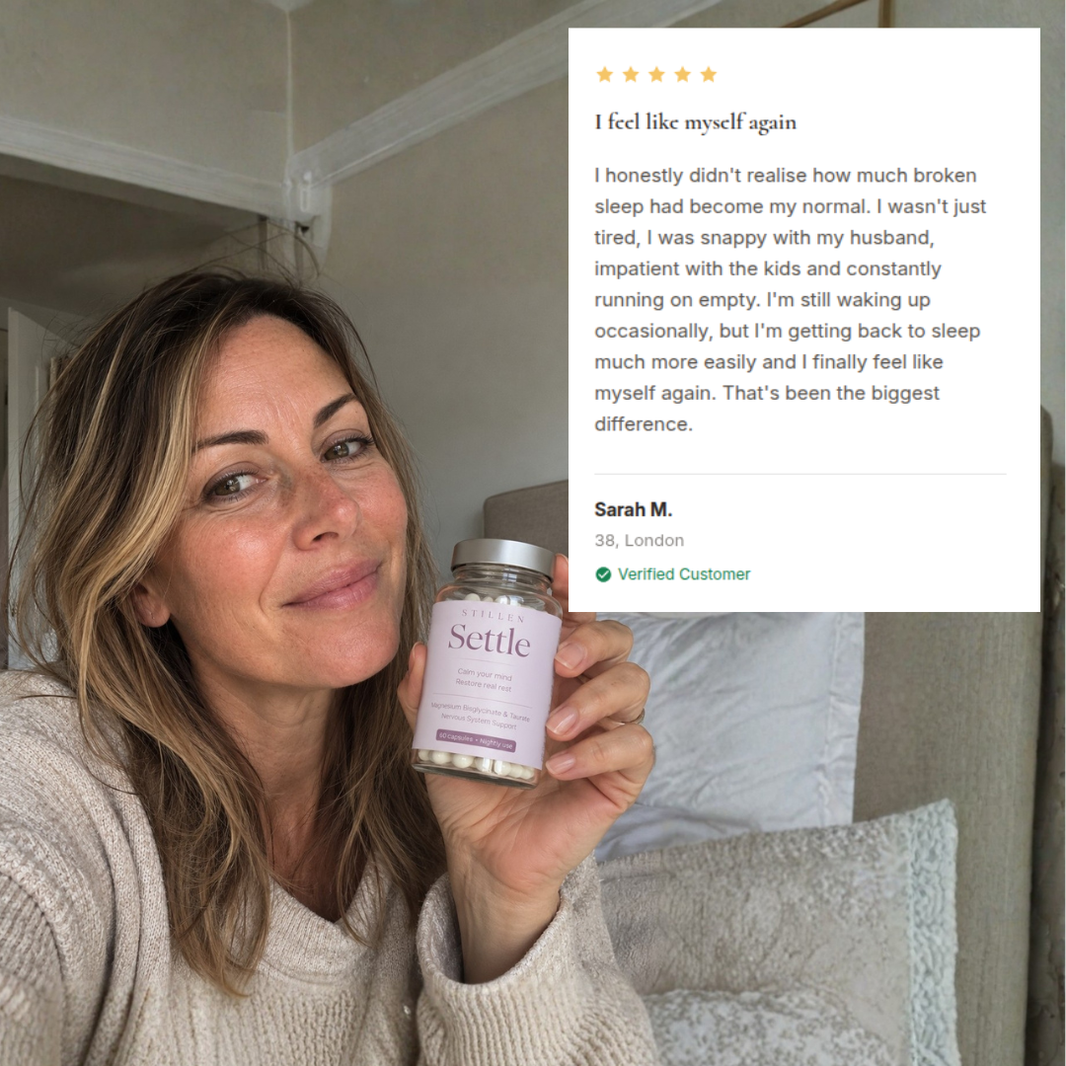
Settle is a magnesium glycinate blend formulated with exactly this in mind, designed to support nervous system calm, restful sleep, and everyday wellbeing for women navigating hormonal change. It works best as one considered part of a broader picture rather than a standalone answer.
HRT: Worth an Informed Conversation
Hormone replacement therapy is a valid and effective medical option for many women, and emerging thinking from Harvard Medical School suggests it has historically been underused, leaving many women without support they could genuinely have benefited from. Whether HRT is right for you depends on your personal health history, your symptoms, and your preferences. What matters is that you feel equipped to have that conversation with your GP rather than assuming it is not available or not suitable. Going in informed makes all the difference.
How to Talk to Your GP About Mood and Menopause
Going to your GP about mood changes can feel surprisingly hard. There is often a quiet worry that you will come across as overdramatic, or that they will put it down to stress and send you away with nothing useful. But asking for this conversation is not overreacting. It is informed self-advocacy, and it matters.
Before your appointment, spend a few minutes jotting down what you have been experiencing: the specific symptoms, when they started, how often they happen, and how they are affecting your daily life, whether that is your sleep, your work, your relationships, or simply your sense of yourself. This kind of concrete detail makes the conversation easier to have and harder to brush aside. Rather than saying "I've not been feeling right," you can say "I've been waking at 3am most nights, I'm exhausted by midday, and I've felt irritable and unlike myself for about six months." That is a very different starting point.
It is also worth asking your GP directly whether the menopause transition could be a factor. This is especially relevant if your mood symptoms began in your late thirties or early forties, well before you might think of yourself as "menopausal," or if you have a history of PMS or postnatal depression. As we covered earlier, hormonal sensitivity tends to travel through a woman's life, and perimenopause can begin years before periods actually stop.
If you want to go into your appointment feeling more prepared, NHS Inform Scotland and the Menopause Charity are both trusted UK resources with clear, evidence-based information on menopause symptoms and available support.
The goal of a good GP conversation is not to walk out with a specific prescription. It is to feel heard, to have the full picture considered, including sleep, hormones, and mental health together, and to understand what options are available to you. That is not asking too much. That is exactly what you deserve.
You Are Not Overreacting. You Are Under-Supported.
What you have been experiencing is real. It is not in your head, it is not you being too sensitive, and it is not something you should simply grit your teeth and push through. The unpredictability, the exhaustion, the moments of feeling completely unlike yourself — these are genuine, well-documented consequences of hormonal change, and they deserve to be taken seriously.
The science is clear on this. Fluctuating and declining oestrogen disrupts the very neurotransmitters that regulate how you feel, and falling progesterone reduces your brain's natural calming buffer. This is biology, not weakness. And because it is biological and increasingly well understood, there are real, evidence-based options that can help.
If there are three things worth holding onto from everything covered here, let them be these. First, understanding the hormonal mechanism genuinely changes how you relate to your symptoms; it shifts the story from "something is wrong with me" to "my nervous system is under-resourced right now." Second, the sleep and mood cycle is not a life sentence; it can be interrupted with the right support. Third, your GP needs to hear about your mood symptoms, not just the physical ones, so that the full picture can shape your care.
Symptoms can and do improve. That is not wishful thinking; it is documented clinical reality. Understanding what is happening inside your body is not a small thing. It is, genuinely, the first step toward feeling more like yourself again.
Conclusion
Your mood changes during menopause are real, they are valid, and they have a clear biological explanation rooted in shifting hormone levels. Here are the key takeaways to remember:
Estrogen and progesterone directly influence your brain's mood-regulating chemicals
Emotional fluctuations during this stage are a normal physiological response, not a personal weakness
Understanding the "why" behind your symptoms is the first step toward managing them effectively
You don't have to white-knuckle your way through this transition alone. Talk to your doctor about your symptoms, explore your options, and connect with others who understand what you're experiencing.
Menopause is a significant chapter of life, but it doesn't have to define you. With the right knowledge and support, you can navigate this season with confidence, clarity, and a whole lot more compassion for yourself.