


You pick up a supplement, flip it over, and there it is: clinically studied. It sounds serious. Official, even. Like somewhere out there, a team of researchers in lab coats ran rigorous tests and concluded that yes, this product works. So you feel a little better about the price tag, drop it in your basket, and move on.
Here is the uncomfortable truth: those two words mean almost nothing on their own.
"Clinically studied" is a marketing phrase with no fixed legal definition, which means brands can use it in ways that range from genuinely meaningful to almost entirely misleading. And because supplement labels are not reviewed by the FDA before they hit shelves, nobody is catching the gap between what the language implies and what the evidence actually shows.
This post is going to walk you through exactly how that happens. You will learn why the regulatory system allows this kind of language, what actually makes a study worth trusting, and the four specific questions that will help you cut through the noise before you spend another dollar on something that may not do what the label suggests.
That Feeling When You Turn the Bottle Over

You're standing in a health shop, or maybe it's 11pm and you're scrolling through your phone, looking for something to help with the sleep that keeps abandoning you at 3am. You pick up a supplement promising to support stress, hormones, or a calmer night. And there it is, printed with quiet confidence on the label: clinically studied.
Something in you wants to trust it. The word "clinical" carries weight. It suggests white coats, peer-reviewed papers, rigorous testing. It feels like proof.
But something also feels slightly off, like you've been handed a sentence with the important part missing.
That instinct is worth listening to. You're not a scientist, but you're not naive either. You've been buying supplements for years, reading labels, doing your research, and you're tired of feeling like you have to take the marketing on faith every single time.
Understanding that changes how you read every label from this point forward.
This piece isn't here to make you distrust everything. There are genuinely well-evidenced products out there, and knowing how to choose a supplement worth taking starts with understanding exactly what the language on the label can and cannot tell you. That's what we're going to work through together.
The Phrase That Means Whatever a Brand Needs It to Mean
Here's the thing: no regulatory body in the UK or the US requires a brand to meet any specific standard before printing "clinically studied" on its label. There is no threshold, no checklist, no authority reviewing the claim before it reaches the shelf. A company can use the phrase freely, with or without meaningful evidence behind it.
That matters, because the word clinical does a lot of psychological work. It conjures white coats, controlled trials, peer-reviewed journals. It feels authoritative in a way that "we think this might help" never could. The language borrows the credibility of science without necessarily having earned it.
This isn't a loophole that brands stumbled upon accidentally. Supplement regulations on both sides of the Atlantic are structured in a way that creates space for scientific-sounding language, so long as it stops short of making formal disease or treatment claims. The regulatory architecture permits the vocabulary of evidence without requiring the substance of it.
That doesn't make every product using the phrase dishonest. Some genuinely are backed by rigorous, relevant research, and some brands use the phrase with complete integrity. The problem is that the phrase itself cannot tell you which category you're holding. It is equally available to both.
So if "clinically studied" carries no fixed meaning, what should you actually be looking at when you're trying to decide whether a supplement is worth trusting? That's exactly what the rest of this piece unpacks.
Why the Rules Allow This to Happen
The ambiguity isn't accidental. It exists because supplement regulations, particularly in the US, draw a sharp line between two entirely different types of claim, and that line shapes almost everything you see on a label.
On one side sit disease claims: statements like "helps lower cholesterol" or "treats insomnia." These link a product directly to a medical condition, and they require formal regulatory approval before a brand can use them. Earning that approval means years of clinical trials and a significant evidentiary burden. Very few supplements clear that bar, which is precisely why you almost never see that kind of language on the shelf.
On the other side sit structure/function claims, and this is where things get interesting. Phrases like "promotes healthy cholesterol" or "supports restful sleep" describe what a nutrient does in the body without mentioning disease. Under FDA guidance on structure/function claims, a brand can use this language without submitting any evidence to a regulator beforehand. None. The claim goes on the label; no authority reviews it first.
Once you know this, certain words start to look different. "Supports," "promotes," "helps maintain," "contributes to" are the tell-tale markers of this lower-scrutiny category. They sound measured and scientific. They are also the phrases that require the least to substantiate.
The UK and EU operate a separate authorised health claims framework rather than the US system, and the UK context is worth understanding before you start supplementing. The regulatory details differ, but the consumer experience is broadly similar: confident language does not automatically mean independently verified evidence.
Which is the grey zone "clinically studied" inhabits.
The Three Things That Actually Make a Study Meaningful
So now you know the regulatory gap exists. The next question is: what would actually close it? Even when a study is real, published, and peer-reviewed, it only tells you something useful if three conditions are met.
1. The specific ingredient was studied
Not the ingredient family. Not a loosely related compound. Not a different extract from the same plant. Some brands reference research on a well-studied herb or mineral while using a proprietary variant that has never been independently tested. The category borrows credibility from the research; the actual ingredient in the capsule may not have earned it.
2. The form and dose match
Different forms of the same mineral can behave differently in the body, a fact that ingredient labels rarely explain. If you want to understand why form matters, what the clinical evidence actually shows about magnesium and the nervous system is worth reading. Dose is equally critical: a study using 300mg tells you nothing meaningful about whether 50mg produces the same effect.
3. The population was relevant to you
A trial in young male athletes is not evidence that the same ingredient supports perimenopausal women navigating disrupted sleep. Who was studied, at what age, in what health context, and what outcome was measured all determine whether the research speaks to your situation. What the studies actually tell us about magnesium and cognitive function shows the difference context makes.
Putting it together
Imagine a brand citing a genuine study on ashwagandha root extract, conducted in stressed male university students, using 600mg daily. Their product contains 150mg of an ashwagandha leaf extract targeting women who are exhausted but cannot rest. The study is real. None of its conditions match the product.
Asking these three questions is not about being difficult. A brand that has genuinely done the work will make the answers easy to find.
Even the Regulators Are Starting to Pay Attention
Those three questions are worth asking partly because the wider industry is slowly being held to account for exactly this kind of gap between language and evidence.
The National Advertising Division (NAD) is a US self-regulatory body that has reviewed advertising claims, including supplement marketing, since 1971. It has no hard enforcement powers, but its decisions carry real reputational weight. If a company ignores a NAD recommendation, the case can be referred to the FTC or FDA, which gives the process genuine teeth despite its voluntary framing.
The NAD has scrutinised broad clinical language in supplement advertising, and those decisions carry reputational weight even without hard enforcement. Those reviews sent a clear signal: absolute claims require substantiation, and the bar is rising.
The industry took notice. "Clinically proven" began to feel risky. "Clinically studied" moved in as the softer alternative. It sounds equally credible, makes no technically falsifiable promise, and sits comfortably in the grey zone that the previous sections have described. The language shifted; the underlying issue did not.
This is actually encouraging news, even if the pace is frustrating. Scrutiny increasing means transparency expectations are rising, and that benefits women who want products that are honest about what the evidence does and does not show.
The honest caveat: this tightening is gradual. Plenty of labels will keep using "clinically studied" in ways that do not survive the three questions you now know to ask. Knowing the direction of travel does not make the current landscape less murky.
Four Questions to Ask Before You Buy
While the industry slowly catches up, you don't have to wait. These four questions take about 60 seconds and work whether you're standing in a shop or scrolling a product page at midnight.
1. Which specific ingredient was studied, and is it exactly what's in this product? Look for the precise ingredient name on the label, not just the category.
2. Was the dose in the study the same as the dose in this product? A study showing a benefit at 300mg tells you very little about whether 50mg of the same ingredient does anything meaningful. If the label dose is significantly lower than what was researched, the evidence may not apply to what you're actually taking.
3. Who was studied? This one matters enormously. Research conducted in young male athletes or healthy women in their twenties is not the same as research in women aged 35 to 55 navigating perimenopause, disrupted sleep, and hormonal change. Check whether the study population actually resembles you.
4. Can you find the actual study? A brand that is confident in its evidence will usually make it easy to find. Look for a named study, a published paper, or a referenced research body. An absence of citations is not proof of wrongdoing, but it is informative. It means you cannot verify the claim, and the brand knows that.
Here is the reassuring part: you do not need to read the research yourself. That is not the point. The point is whether a brand that describes itself as thoughtfully formulated for women makes verification possible at all. Transparency is the signal. A brand that hides its evidence behind a phrase is telling you something, even if it is not what it intended.
What Genuinely Well-Evidenced Looks Like
Those four questions are a filter. This part is about what passes through it.
A genuinely well-evidenced supplement is not difficult to spot once you know what you're looking for. It names its ingredients precisely, in the specific forms that have been researched. Its doses sit close to the amounts used in actual studies, not quietly reduced to a level that looks impressive on a label but bears little relation to the evidence. And when it references clinical research, it points you toward something real: a named study, a published paper, a research body you can look up.
Equally telling is what a transparent brand does not do. It does not stretch the evidence to cover outcomes it cannot support. It says "supports restful sleep" because that is what the research shows, not because it sounds more compelling than the truth.
Researchers and regulators have increasingly acknowledged the need for studies in women's specific health contexts, and that expectation is one consumers can and should hold brands to.
No supplement will have perfect clinical proof for every woman's exact situation. That is not a realistic standard for any product. The goal is proportionality: does the claim match the evidence, honestly?
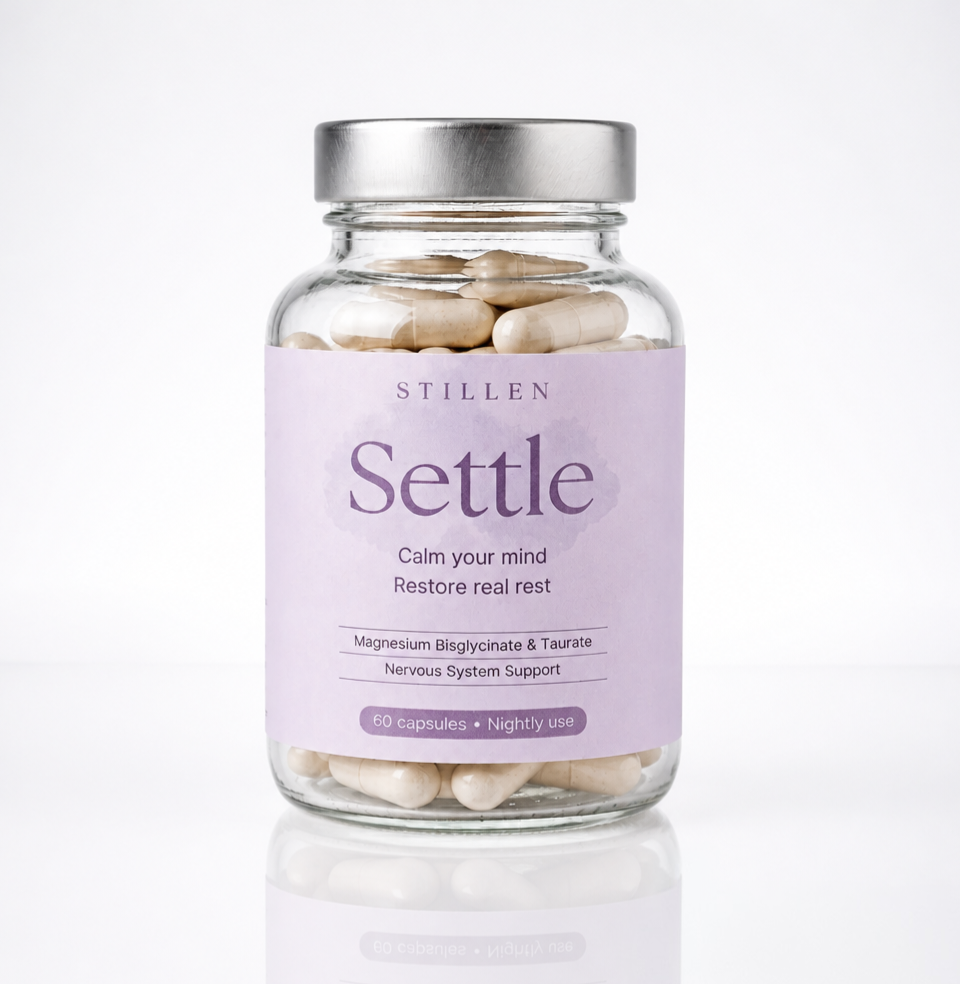
Settle was formulated with this in mind. The form and dose used in Settle reflect the research on magnesium's role in nervous system support and sleep quality, not just magnesium in general. The claims are grounded and specific: restful sleep, nervous system support, everyday wellbeing.
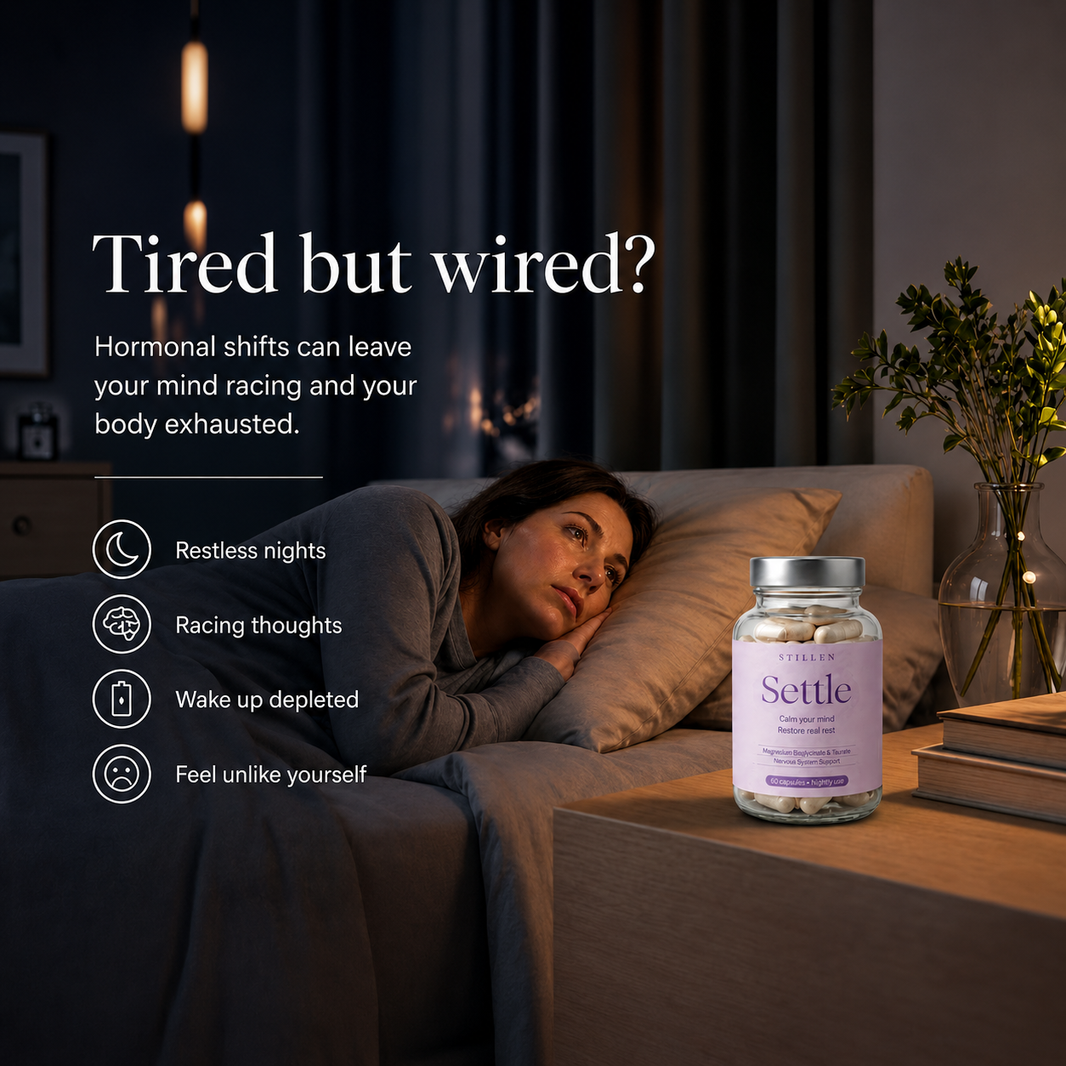
If you wake at 3am with your mind already running, or spend your days feeling tired but wired, you deserve a product that is honest with you about what it can offer.
You Already Know More Than Most People in This Aisle
You now have a genuinely useful filter that most people browsing that aisle have never been given.
"Clinically studied" is a marketing phrase with no fixed regulatory meaning. What actually matters is whether the specific ingredient, in the specific form and dose, was studied in a population that resembles you. You have both frameworks now, the three-factor test and the four questions, and they take under a minute to run.
The supplement industry is not broadly dishonest. Most brands are operating within a system that simply allows confident-sounding language with minimal scrutiny. But informed consumers change that. When women start asking better questions, the brands doing the work rise, and those trading on vague language have to raise their standards or lose ground.
You deserve products that take you seriously. Not labels that sound scientific without being substantiated, and not small print that obscures more than it explains. If that expectation resonates, you might find You Deserve More Than Just Coping a useful next read.
The questions you now know how to ask are exactly the right ones. Trust them.
Conclusion

"Clinically studied" sounds authoritative. Now you know it isn't, not automatically.
The industry is not your enemy, but it is operating inside a system that rewards confident language over rigorous evidence. The brands worth your money will welcome the scrutiny. Informed shoppers are the most powerful force for changing that standard.
You came into this knowing something felt off. You are leaving with the tools to act on that instinct every single time.
Frequently Asked Questions
What does 'clinically studied' actually mean on supplement labels?
'Clinically studied' is a marketing phrase with no fixed legal definition. Supplement brands can use it freely without regulatory approval, meaning the phrase can range from genuinely meaningful to almost entirely misleading. Unlike disease claims, which require FDA approval, there is no authority reviewing 'clinically studied' claims before they reach shelves, creating a significant gap between what the language implies and what evidence actually exists.
Why is there a difference between 'disease claims' and 'structure/function claims'?
Disease claims (like 'treats insomnia') require formal FDA regulatory approval and rigorous clinical trials. Structure/function claims (like 'supports restful sleep') describe what a nutrient does without mentioning disease and require NO evidence submission to regulators beforehand. This regulatory gap is why you see phrases like 'supports,' 'promotes,' and 'helps maintain' on labels—they require the least substantiation while sounding scientific and credible.
What are the three conditions that make a study actually meaningful?
A study is only meaningful if: (1) The specific ingredient was studied—not just a related compound or different extract from the same plant; (2) The form and dose match—different forms behave differently, and a study using 300mg tells you nothing about whether 50mg works; (3) The population was relevant to you—a study in young male athletes doesn't apply to perimenopausal women, for example. All three conditions must align with your situation.
What four questions should I ask before buying a supplement?
Ask: (1) Which specific ingredient was studied, and is it exactly what's in this product? (2) Was the dose in the study the same as the dose in this product? (3) Who was studied—does the population resemble you? (4) Can you find the actual study? Look for named studies, published papers, or referenced research bodies. These take about 60 seconds to check and reveal whether a brand is being transparent about its evidence.
What are the signs of a genuinely well-evidenced supplement?
A transparent supplement brand names its ingredients precisely in the specific studied forms, uses doses close to amounts used in actual research (not quietly reduced), and points you toward real evidence like named studies or published papers. It also avoids stretching evidence to unsupported claims and is honest about what research actually shows. Importantly, it welcomes scrutiny and makes verification possible rather than hiding behind vague marketing language.